
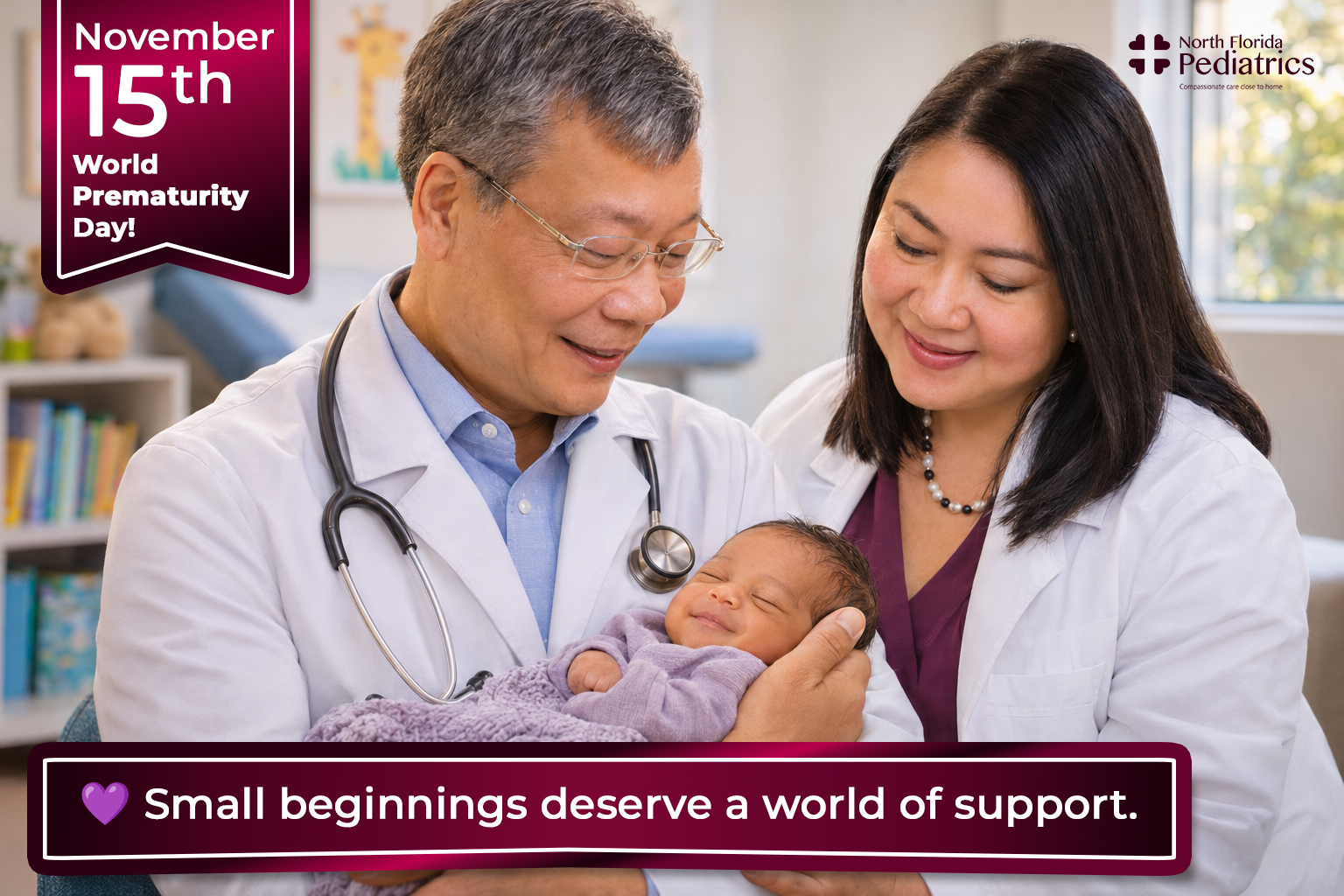
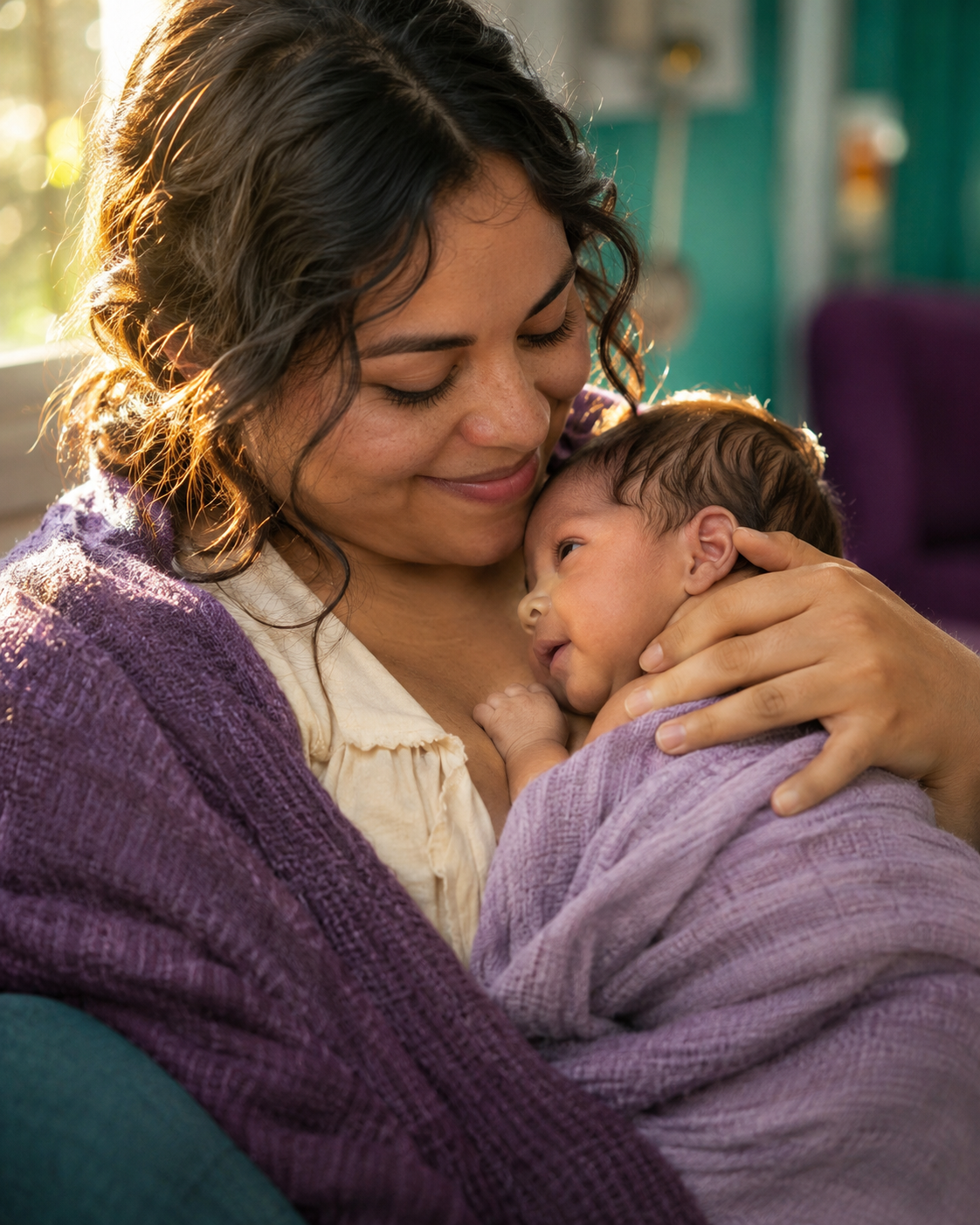
This Sunday, November 15, North Florida Pediatrics joins families around the world in recognizing World Prematurity Day. We honor babies born early, the people who care for them, and the families navigating an unexpected start. Every baby deserves compassionate, individualized care, and every parent deserves encouragement, practical help, and understanding.
A premature, or preterm, birth happens before 37 completed weeks of pregnancy. About one in ten babies worldwide is born preterm. Some babies need specialized support for breathing, feeding, and staying warm while their bodies continue developing.
The Global Foundation for the Care of Newborn Infants shares this 2026 message: “Small babies, big potential. Invest in follow-up care to protect their future!” It reminds us that support must continue after a baby leaves the hospital.
Although not every premature birth can be prevented, certain steps can help lower the risk. These recommendations support healthier pregnancies; they are never a reason to blame a mother whose baby arrives early. Sometimes early delivery is medically necessary to protect the mother or baby.
- Start prenatal care early. Schedule care as soon as you know you are pregnant and keep recommended visits. Tell your obstetric provider about any previous premature birth so they can discuss monitoring or treatments appropriate for you.
- Avoid tobacco, vaping, alcohol, and recreational drugs. Reduce exposure to secondhand smoke, too. If stopping feels difficult, ask your pregnancy care team for support and a safe treatment plan. You deserve help without judgment.
- Manage existing health conditions. Work with your healthcare team to control conditions such as high blood pressure and diabetes before and during pregnancy. Review medications and supplements together, and do not stop prescribed treatment without medical guidance.
- Prevent infections and seek timely treatment. Wash your hands, follow pregnancy food safety guidance, and complete recommended infection screening. Ask about appropriate vaccines. Contact your obstetric provider promptly for symptoms such as burning during urination.
- Discuss spacing future pregnancies. For many families, waiting at least 18 months after giving birth before becoming pregnant again can reduce risk. Your provider can help individualize that plan based on your health, age, and reproductive history.

Know when to seek help: before 37 weeks, regular contractions, pelvic pressure, persistent lower backache, bleeding, or leaking fluid need immediate attention. Call your obstetric provider or go to the hospital; do not wait for your next appointment.
For babies born early, ongoing pediatric visits, developmental monitoring, and specialist care when needed remain essential. Parents can ask their pediatrician how corrected age, based on the original due date, helps guide expectations for early milestones during the first two years. Families also need support with daily challenges. Offering meals, transportation, or a listening ear can make a difference.
At NFP, we recognize every family’s experience, including those grieving a loss. This World Prematurity Day, let us surround babies and parents with compassion, celebrate progress without comparison, and support their next steps together. Contact your NFP office to discuss your baby’s growth, development, or follow-up needs. Every family’s questions and concerns matter.
Consulted sources link:
https://www.who.int/campaigns/world-prematurity-day/2026/
https://www.cdc.gov/maternal-infant-health/preterm-birth/
https://www.acog.org/womens-health/faqs/preterm-labor-and-birth
Health Effects of Vaping
https://www.nichd.nih.gov/health/topics/factsheets/preterm
What Kinds of Follow-Up Care Will My Baby Need After NICU Discharge? – HealthyChildren.org
Prepregnancy Counseling
https://www.acog.org/clinical/guidance/obstetric-care-consensus/2019/01/interpregnancy-care