
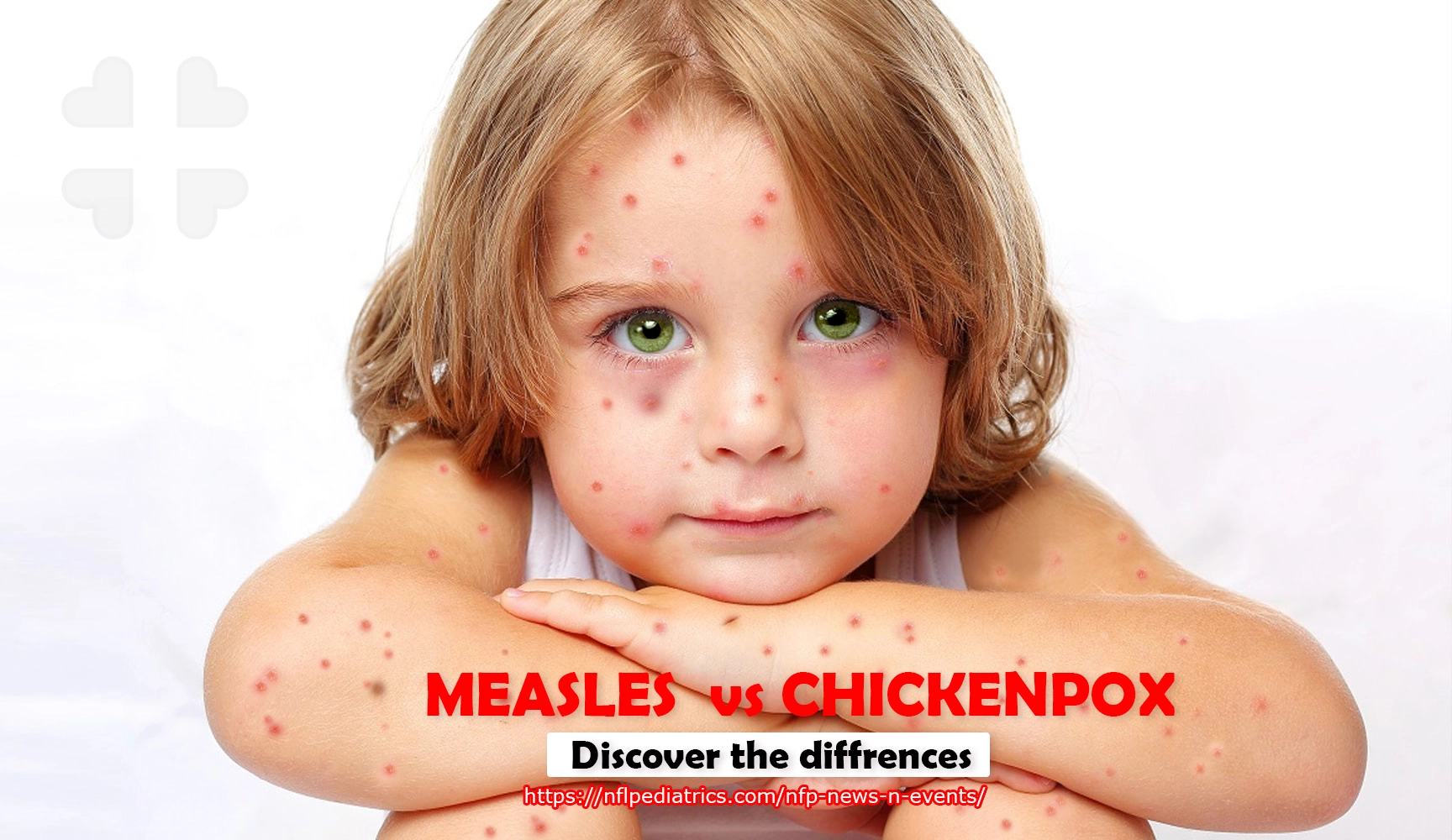
Chickenpox vs Measles, what’s the difference?
Viral infections are diseases caused by pathogenic viruses. These viral infections range from mild to severe and deadly. Viral infections commonly cause respiratory and digestive diseases and also affect the whole body. There are various viral infections, including respiratory infections, infections of the digestive system, viral hemorrhagic fevers, sexually transmitted infections, exanthematous viral infections, neurological infections, and congenital infections.
Smallpox, chickenpox, and measles are exanthematous viral infections because they cause skin rashes. They give swellings or blisters on the skin surfaces and spread throughout the body. The main difference between smallpox, chickenpox, and measles is the causative agents. The causative agent of smallpox is the smallpox virus, while the causative agents of chickenpox and measles are the varicella-zoster virus and the measles virus, respectively.
What causes chickenpox and measles?
Chickenpox and measles are both infectious diseases, but are caused by different viruses. Chickenpox in children is caused by the varicella-zoster virus (VZV). Measles, also called rubella, is caused by the measles virus. Both diseases were once common childhood infections, but can now be prevented by vaccination. Both are highly contagious and were once considered common childhood illnesses in children under 12. Experts believe that 90% of close contacts who haven’t had chickenpox or the chickenpox vaccine will develop the disease through direct contact. (Source)
The same applies to measles: 9 out of 10 unvaccinated people will develop the condition if they are near someone who has it. (Source)
It’s worth noting that both viruses are airborne. This means that you can get the virus by inhaling respiratory droplets from someone who has the condition. You can also get both viruses if you touch a surface or object that someone with the condition has come in contact with. Fluid from broken blisters can also spread chickenpox.
Both viruses are also contagious before visible signs of the condition appear.
People with chickenpox can pass the virus to others up to 2 days before a rash appears. They remain able to transmit the virus until all the blisters have ruptured and dried. The typical chickenpox infection lasts 4 to 7 days. People in high-risk groups, such as those with a weakened immune system, may have the condition for longer. Unfortunately, they can also develop complications from the infection. (Source)
People with measles can transmit the virus up to 4 days before a rash appears. They are then able to transmit the virus another 4 days after the rash appears.
Healing from measles can take longer, sometimes 2 to 3 weeks. Complications of measles include:
- ear infections
- pneumonia
- bronchitis
- encephalitis (swelling and irritation of the brain)
What are the symptoms of chickenpox and measles?
Both measles and chickenpox cause skin rashes, but these rashes differ enough that understanding the two conditions should make them easier to distinguish.
The typical rash of chickenpox in children starts as red spots on the chest, stomach, face, and back. It can also spread to other parts of the body.
In 2 to 4 days, a rash will turn into fluid-filled blisters called vesicles. These raised bumps itch and will rupture and leak fluid. It’s not uncommon for someone to have 250 to 500 blisters. (Source) The ruptured blisters will dry out. Once all the blisters have developed a crust, they no longer transmit the virus further.
Other symptoms of varicella include fever, fatigue, loss of appetite, and headache. Vesicles can also develop in the mouth.
On the other hand, a rash of measles in children starts as a flat red, blotchy rash on the forehead. It can spread, and the spots may begin to appear side by side. In some people, small fluid-filled spots may develop.
Other symptoms of measles include a runny nose, cough, sore throat, and red, inflamed eyes (conjunctivitis). People with measles may also develop Koplik’s spots, which are small, red spots with blue-white centers inside the mouth and on the cheeks.
In darker-skinned people, both rashes may not appear visibly red. Instead, they may appear darker than the skin around the rash. Chickenpox in children with darker skin may look like bumps or raised pimples.
The symptoms of varicella in adults are usually similar to the symptoms of chickenpox in children. However, adults are at higher risk of severe symptoms and complications.
How are chickenpox and measles treated?
Because chickenpox and measles are viral infections, antibiotics are not an effective treatment. Instead, treatment for these two conditions focuses on relieving symptoms and reducing the risk of complications.
People with chickenpox can take an over-the-counter antihistamine such as Benadryl. This medication can help reduce itching. (Source)
A doctor may prescribe an antiviral for people at high risk for varicella complications. These medications are only intended to reduce the severity of the infection.
Varicella is at increased risk of complications if:
- People with weakened immune systems
- Pregnant women
- Newborns
- People with chronic immune weakening conditions, such as leukemia
- Adults who have not had or have not been vaccinated for chickenpox.
Are varicella and measles vaccines effective?
Chickenpox and measles infections are both easily preventable by vaccination. Vaccines for both viruses are part of regular childhood immunization schedules. Each vaccine has two doses. Health professionals usually give the first dose between 12 and 15 months of age. The second dose, a booster, is usually given between 4 and 6 years of age.
Today, 90% of children receive the first dose for both viruses by age 2. The varicella vaccine alone prevents about 3.5 million cases each year. It also means 9,000 fewer hospitalizations and 50 fewer deaths each year. (Source)
It is worth noting that adults who were not vaccinated as children can choose to be vaccinated regardless of age. The vaccine will be useful for personal protection, but also to protect those around you, as it will prevent transmission of the virus.
Avoiding a chickenpox infection can help you avoid another condition later in life: shingles. The varicella-zoster virus, which causes chickenpox, stays in the body after the infection has healed. It goes dormant in the nervous system and can reactivate later as shingles, a painful skin rash.
Children who are vaccinated against chickenpox are much less likely to develop shingles as they grow up. A shingles vaccine is also available for people who have had chickenpox.
Similarly, the measles vaccine is very effective. After one dose, it is 93% effective in preventing infection, and after two doses, it is 97% effective. (Source)
Chickenpox vs measles for home treatment
You can help relieve the symptoms of both infections with a few simple and affordable ways:
- Rest and plenty of fluids.
- An over-the-counter (OTC) medicine, such as acetaminophen or ibuprofen, to relieve fever. Important: Never give aspirin to children.
- In case of a cough or sore throat, use a humidifier to relieve discomfort.
- Do not scratch chickenpox spots – no matter how much discomfort they cause! This can lead to scarring or infection. If your child has chickenpox, consider putting gloves on your child’s hands or trimming their nails to discourage scratching.
- Turn to a cold bath or use cold compresses to ease the itching. Use a clean towel to dry gently afterward.
- Apply calamine lotion to any itchy spots, avoiding the eyes and face.
- If blisters form in your mouth, try eating cold and bland foods while avoiding hot, spicy, or acidic foods.
Conclusion
Chickenpox and measles were once common childhood infections. They both start as red rashes, but the appearance and location of the rash can tell you a lot about the infection you probably have.
Today, vaccinations have greatly reduced cases of both chickenpox and measles. Measles is such a rare condition that it was once thought to have been eliminated. However, unvaccinated people continue to reintroduce the virus into the population and spread it.
If you have had chickenpox in the past, you are unlikely to develop it again. Some infections can occur in people vaccinated against chickenpox, but symptoms tend to be milder, with few or no blisters.
Both varicella and measles are very effective and safe. They can help prevent you or your child from getting sick and reduce the spread of these infections in the community.
Sources:
https://www.immunize.org/vaccines/vis/varicella/
https://www.cdc.gov/chickenpox/about/transmission.html
https://www.cdc.gov/globalhealth/measles/data/global-measles-outbreaks.html
https://www.cdc.gov/chickenpox/about/symptoms.html
https://www.healthline.com/health/allergies/antihistamine-brands
https://www.cdc.gov/nchs/fastats/immunize.htm
https://www.cdc.gov/vaccines/vpd/varicella/hcp/about-vaccine.html