

Baby Development at 4-6 Months
Child Development Guide & Milestones: 4 to 6 Months Baby

Big strides in development occur between 4 and 6 months of age as your baby becomes more mobile, social, and curious. During this stage, the left and right sides of the brain begin working together, allowing for smoother movements and more coordinated actions—like passing toys between hands or rocking on the floor in preparation for crawling.
Babies at this age are learning how to interact with the world around them. To get your attention, they may cry, squeal, babble, or laugh. As their muscles strengthen, many babies push up on their arms while lying on their bellies to get a better view of their surroundings.
Developmental Milestones
Doctors use developmental milestones to help determine whether a baby is growing as expected. Because there is a wide range of what’s considered normal, some babies may reach milestones earlier or later than others. Babies born prematurely may also develop at a different pace. Always talk with your pediatrician if you have concerns about your baby’s progress.
How Much Will My 4- to 6-Month-Old Baby Grow?
While every baby grows at their own pace, average growth during this stage includes:
- Weight: Gains about 1 to 1¼ pounds per month; many babies double their birth weight by 4–5 months
- Length: Grows approximately ½ to 1 inch per month
- Head circumference: Increases by about ½ inch per month
What can my baby do at this age?
This is a highly social stage, and babies begin moving with greater purpose. Common milestones during this period may include:
- Early infant reflexes (grasp, Moro, rooting, tonic neck) begin to disappear
- Holds head steady and balanced
- Sits with support, often with a rounded back
- Supports weight on legs when held upright
- Rolls from back to front and front to back by around 6 months
- Transfers objects from one hand to the other
- Grasps feet and toes while lying on their back
- Makes “swimming” motions when on their tummy
- Increased drooling (not always related to teething)
- Takes two to three naps daily
- Sleeps longer stretches at night (6–8 hours)
- Develops full color vision and improved distance vision

Why Is Touch Important at This Age?
Touch plays a vital role in helping babies feel safe, secure, and loved. Through cuddling, holding, and gentle play, your baby learns trust and emotional connection.
Encourage sensory exploration by offering toys and books with different textures. Let your baby safely explore their surroundings—whether touching a soft blanket, feeling carpet fibers, or grasping textured toys.
How Long Should My 4- to 6-Month-Old Baby Sleep?
By this age, many babies begin developing a more predictable sleep pattern. Most no longer require nighttime feedings, though some—especially breastfed babies—may still wake briefly.
- Total sleep: 12–16 hours per day
- Daytime sleep: About 3–4 hours across at least two naps
- Nighttime sleep: By 6 months, many babies sleep 9 hours or longer, with brief awakenings
Supporting Emotional Development and Security
You can help nurture your baby’s emotional growth by:
- Repeating sounds and smiling when your baby vocalizes
- Laughing and playing together
- Talking and mimicking your baby during daily routines
- Spending time on the floor playing every day
- Dancing and using rhythmic movement
- Introducing your baby to other children and caregivers
- Placing safe toys nearby to encourage reaching
- Playing peek-a-boo to build object permanence
- Reading books and pointing out pictures
- Showing your baby their reflection in a mirror
- Comforting and cuddling your baby when upset
Communication and Sensory Milestones
What Can My Baby Say?
Your baby’s communication skills expand rapidly during this stage. Common milestones include:
- Coos and gurgles in response to voices or toys
- Babbles and imitates sounds
- Produces single-syllable sounds like da, ma, or ba by 6 months
- Laughs, squeals, and blows raspberries
How Do Babies Communicate at This Age?
Babies experiment with pitch, tone, and volume. You may notice their voice rising and falling as if asking a question. Encourage this early communication by responding, repeating sounds, and engaging in simple “conversations.”
What Does My Baby Understand?
As awareness increases, babies begin to recognize people, objects, and routines. Common signs include:
- Recognizing familiar faces
- Holding arms out to be picked up
- Beginning to understand object permanence
- Showing displeasure when something or someone leaves
- Responding to their name
- Pausing when hearing “no.”
- Exploring cause and effect (dropping toys to hear sounds)
Vision, Hearing, Taste, and Smell
Vision
Babies can now focus at greater distances and distinguish colors more clearly. Hand-eye coordination improves, allowing them to track objects and reach intentionally.
Hearing
Hearing continues to support language development. Babies respond to voices, imitate sounds, and enjoy back-and-forth vocal play.
Taste and Smell
Babies can taste and smell, and tend to prefer sweet flavors. Breastfed babies may also experience subtle flavor changes based on their mother’s diet.
Feeding Milestones: Introducing Solid Foods
Most babies begin trying solid foods around 6 months, depending on readiness. Always check with your pediatrician before introducing solids.
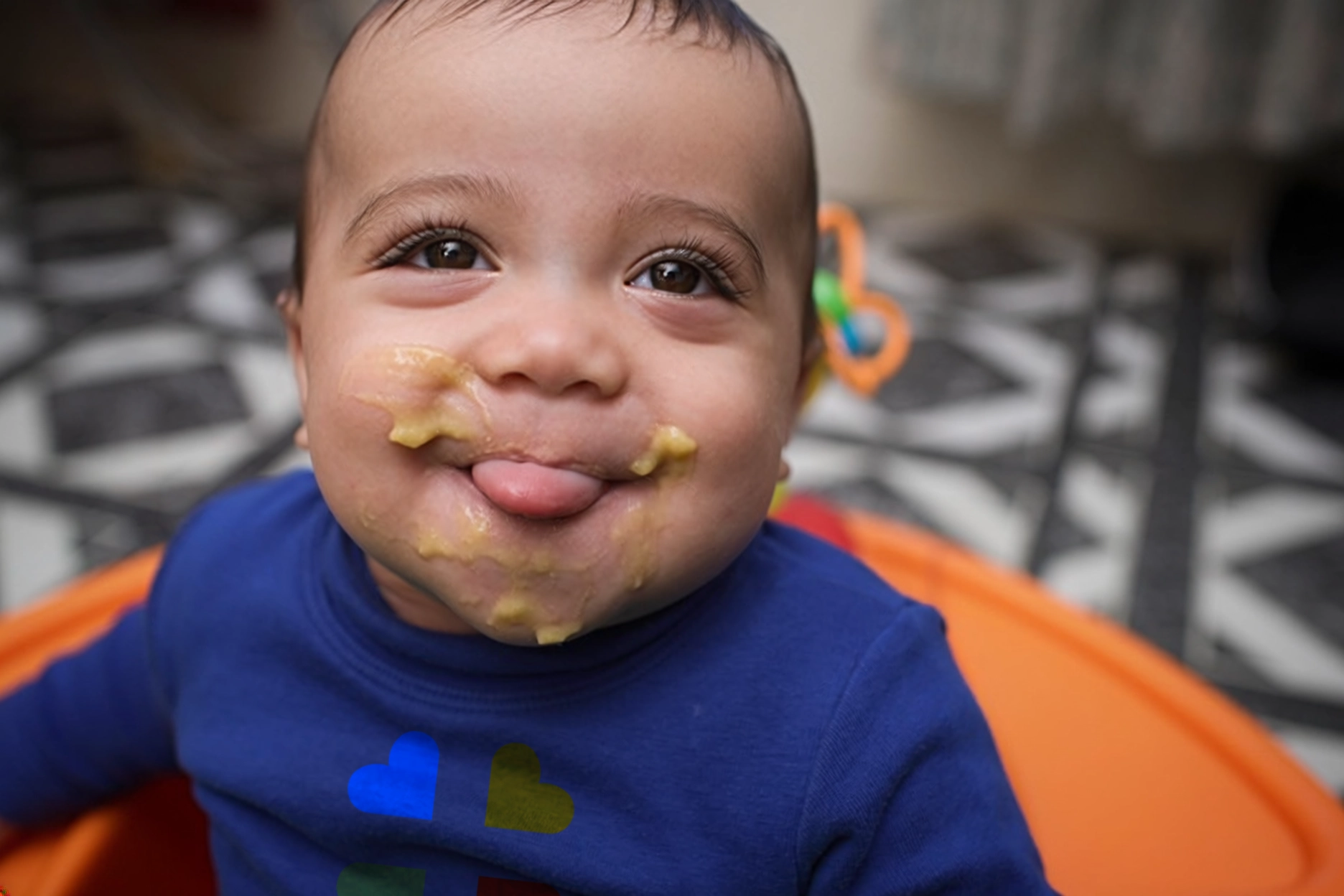
Signs Your Baby May Be Ready
- Reduced tongue-thrust reflex
- Good head and neck control
- Interest in food (watching or reaching for it)
Solids are a supplement at this stage—breast milk or formula remains the primary source of nutrition.
Tips for Feeding Solid Foods
- Choose single-ingredient, finely puréed foods at first
- Avoid added sugars and fillers
- Practice proper food safety
- Steam or bake foods to preserve nutrients
- Introduce cups around 6 months, using water
- Limit water intake to no more than 6 ounces (226.8 g) per day
- Avoid juice until after age 1