

Newborn Development (Birth to 1 Month)
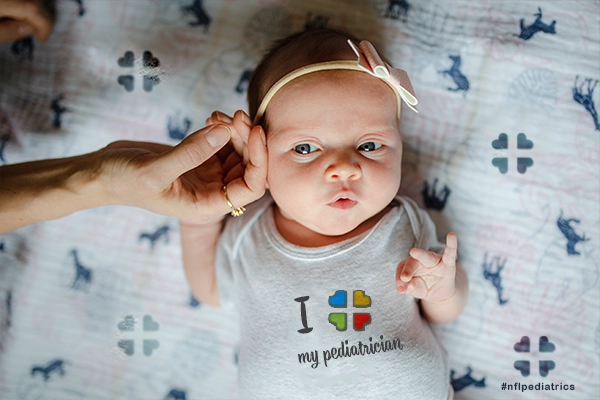
The newborn stage is a time of rapid growth and adjustment—for both babies and parents. During the first month of life, your baby is learning how to eat, sleep, sense the world, and feel secure outside the womb. While every newborn develops at their own pace, many share common growth patterns, reflexes, and behaviors during these early weeks.
Physical Growth: How Much Will My Newborn Grow?
In the first few days after birth, it’s normal for babies to lose up to 10% of their birth weight. Most regain this weight by two weeks of age and then continue to grow steadily.
Typical growth patterns during the first month include:
- Weight: After the first two weeks, babies gain about 1 ounce (37.8 g) per day
- Average length at birth:
- Boys: ~20 inches (50.8 cm)
- Girls: ~19¾ inches
- Average length of one month:
- Boys: ~21½ inches
- Girls: ~21 inches (0.53 m)
- Head growth: Increases by just under 1 inch (2.54 cm) by the end of the first month
Your pediatrician will monitor growth closely to ensure your baby is developing appropriately.
What Affects My Newborn’s Physical Growth?
Several factors influence a baby’s size and growth, including:
- Length of pregnancy: Babies born closer to their due date are often larger
- Parent size: Genetics play a role in newborn size
- Multiple births: Twins or triplets are often smaller at birth
- Birth order: Firstborn babies may be slightly smaller
- Gender: Boys tend to be slightly larger than girls
- Mother’s health during pregnancy: Conditions such as high blood pressure, diabetes, smoking, alcohol use, or poor nutrition can affect birth weight
- Baby’s health: Some medical conditions or infections during pregnancy may impact growth
What Can My Newborn Do?

Although newborns sleep most of the day, their awake time is full of important activity. Many movements are reflexive, meaning they happen automatically as the nervous system matures.
Common Newborn Reflexes
- Rooting reflex: Helps the baby find the breast or bottle
- Sucking reflex: Enables feeding and develops fully near term
- Moro (startle) reflex: A response to loud sounds or sudden movement
- Tonic neck reflex: “Fencing” posture when the head turns
- Grasp reflex: Fingers curl when the palm is touched
- Babinski reflex: Toes fan outward when the sole is stroked
- Step reflex: Appears as stepping when the feet touch a surface
Typical Newborn Movements & Behaviors
- The head needs full support
- Turns the head side to side while on the stomach
- Jerky or uncoordinated movements
- Hands move toward the mouth
- Briefly focuses on faces or light
- Begins lifting the head during tummy time
Communication: What Can My Newborn Say?
Crying is a newborn’s primary way of communicating. At first, cries may sound similar, but over time parents often recognize different cries for hunger, discomfort, fatigue, or the need for comfort.
Responding promptly with holding, rocking, gentle words, or feeding helps your baby:
- Feel safe and secure
- Learn trust
- Build emotional attachment
Understanding & Awareness
Your newborn is already learning about the world and may:
- Startle at loud noises
- Focus on faces or high-contrast black-and-white images
- Respond to familiar voices
- Show early smiles, often during sleep
Sleep: How Much Does My Newborn Need?

Newborns typically sleep 14–17 hours per day, and some may sleep up to 18–19 hours. However, sleep occurs in short stretches.
- Newborns should not sleep longer than 4–5 hours at a time during the first 5–6 weeks
- Breastfed babies usually feed every 2–3 hours
- Bottle-fed babies may feed every 3–4 hours
Parents may need to wake newborns for feeding until they regain birth weight (usually within two weeks). Once weight gain is steady, longer nighttime sleep stretches may be appropriate.
Every baby’s sleep pattern is different. Some begin sleeping longer stretches by 2–3 months, while others take more time.
Supporting Your Newborn’s Emotional Security
Your newborn depends on close, loving interactions to feel safe in their new environment. Emotional security supports brain development, learning, and healthy relationships.
Simple ways to support your newborn include:
- Holding your baby face-to-face
- Speaking in a calm, affectionate voice
- Singing softly
- Walking with your baby in a carrier or stroller
- Swaddling to reduce the startle reflex
- Rocking gently
- Responding quickly to cries
These everyday moments build trust and strengthen your bond.